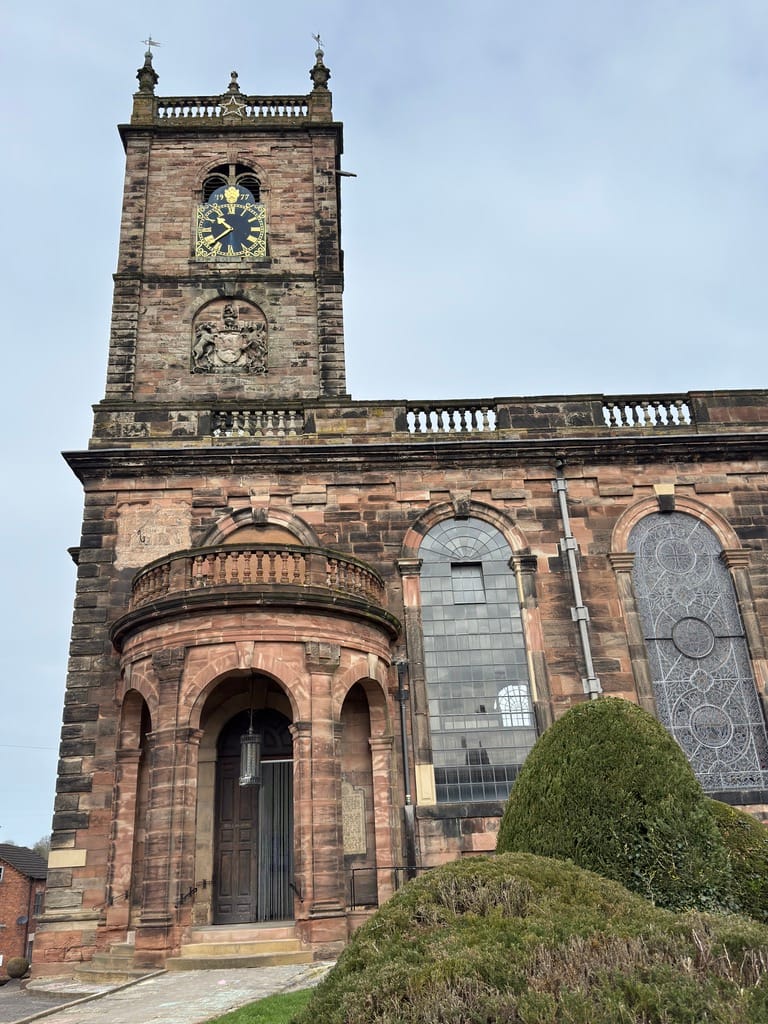
Chester Cathedral

**Please note the layout plan and key at the bottom of this page.
Hugh D'Avranches, known as Hugh Lupus (the Wolf), William the Conquerer's nephew and the first Norman Earl of Chester, founded a Benedictine monastry here in 1092.
Construction began at that time and continued over the following 400 years; being extended and altered according to the ecclesiastical fashion of the times.
Construction came to an end in 1539, when the monastry was dissolved by order of King Henry VIII, and in 1541 the old monastry became the cathedral of the newly created Diocese of Chester.
The building is constructed in the main of friable sandstone, which has caused several restorations to take place; notably in the 1820s and again in 1868-1876 when a much larger-scale restoration was undertaken.
Since then there has been a continuing programme of restoration and conservation work to this day, including the building of a new and separate bell tower adjacent to the city walls, opened in 1974.
More recently, work has included the renewal of the Nave floor and the extensive cleaning of the Nave and Quire ceilings in 1997.
In 2005 a new Song Schools was built on the site of the old monk's dormitory, and the Pilgrim Porch in 2022.
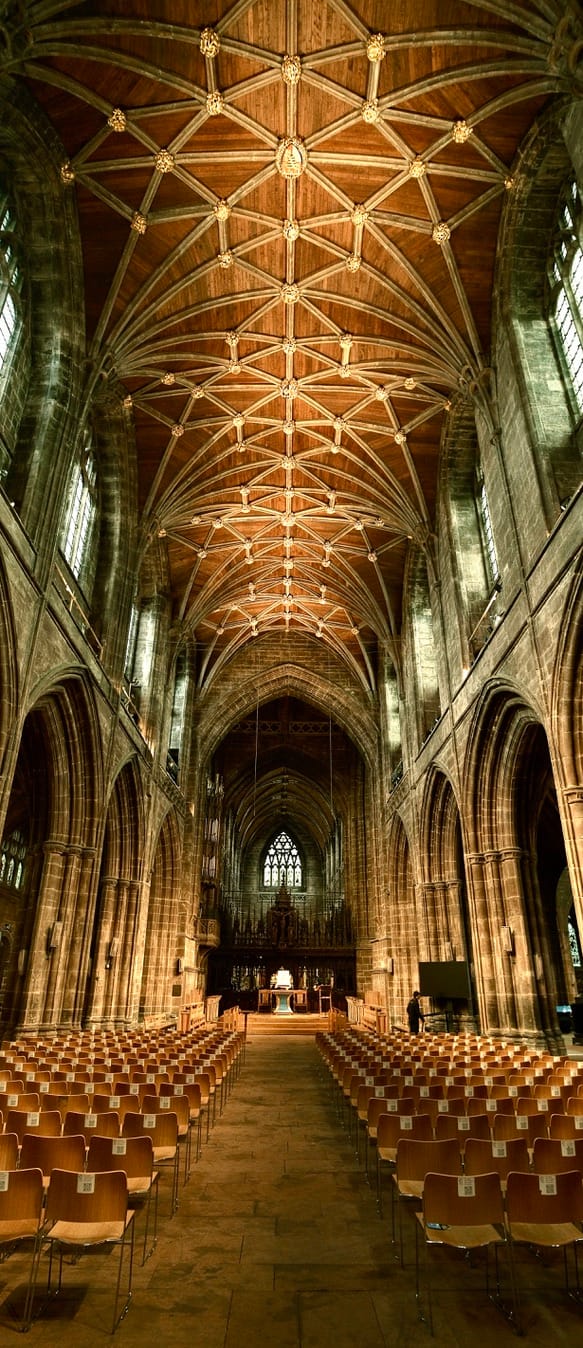
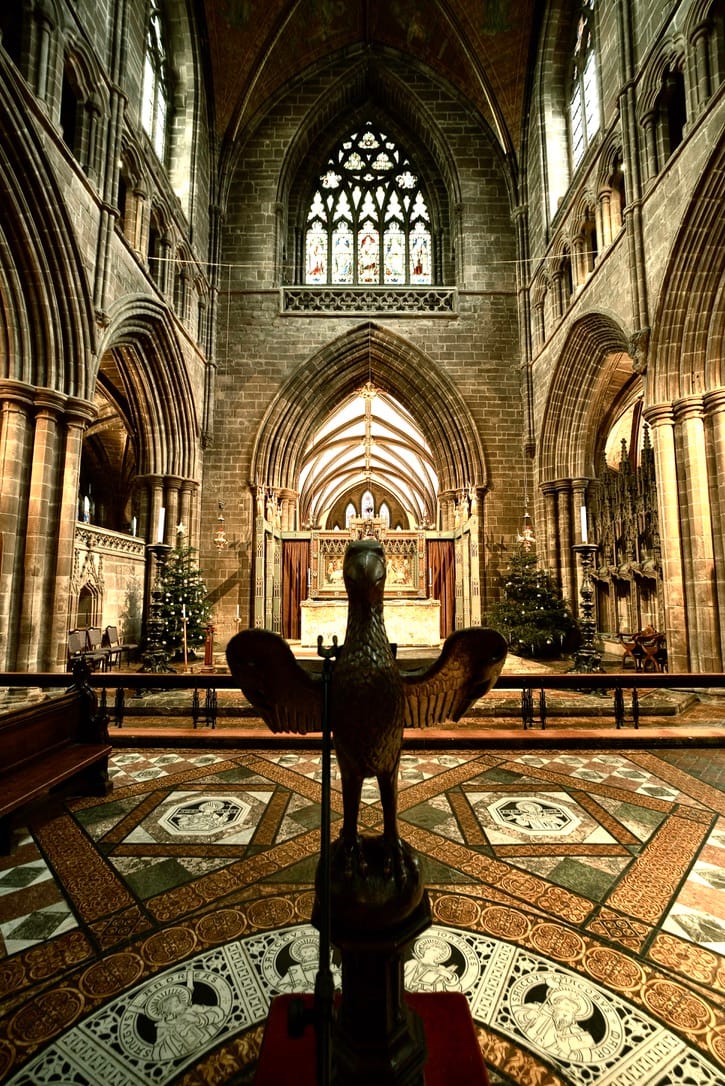
The Nave || South Transept
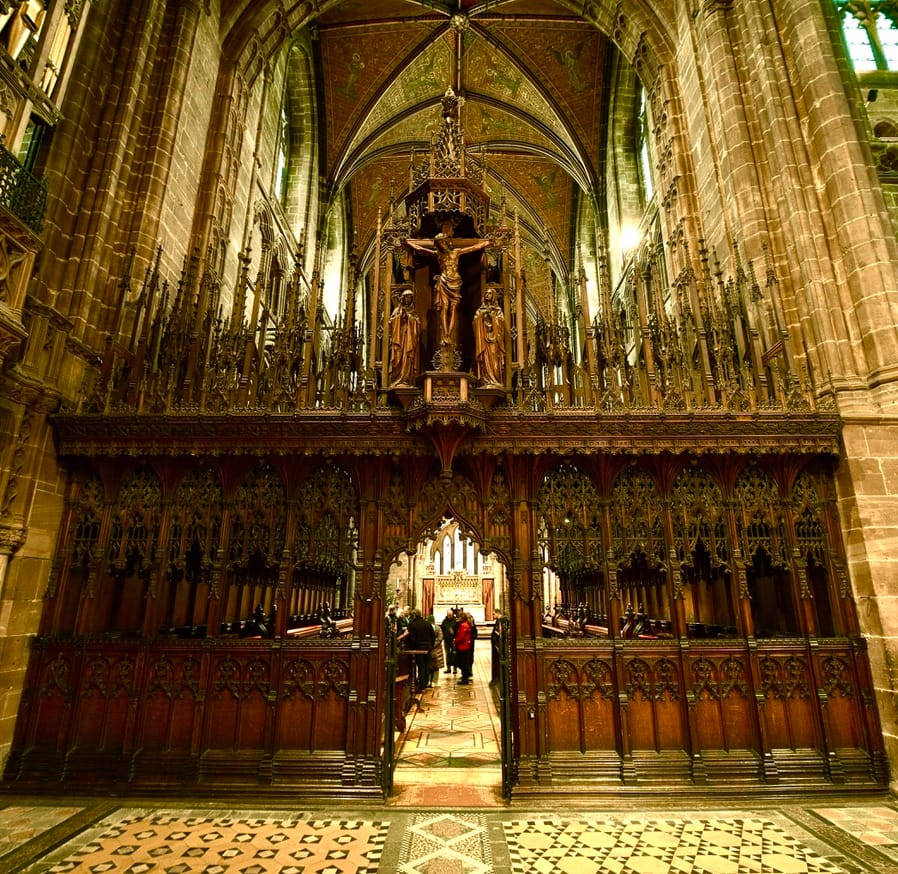
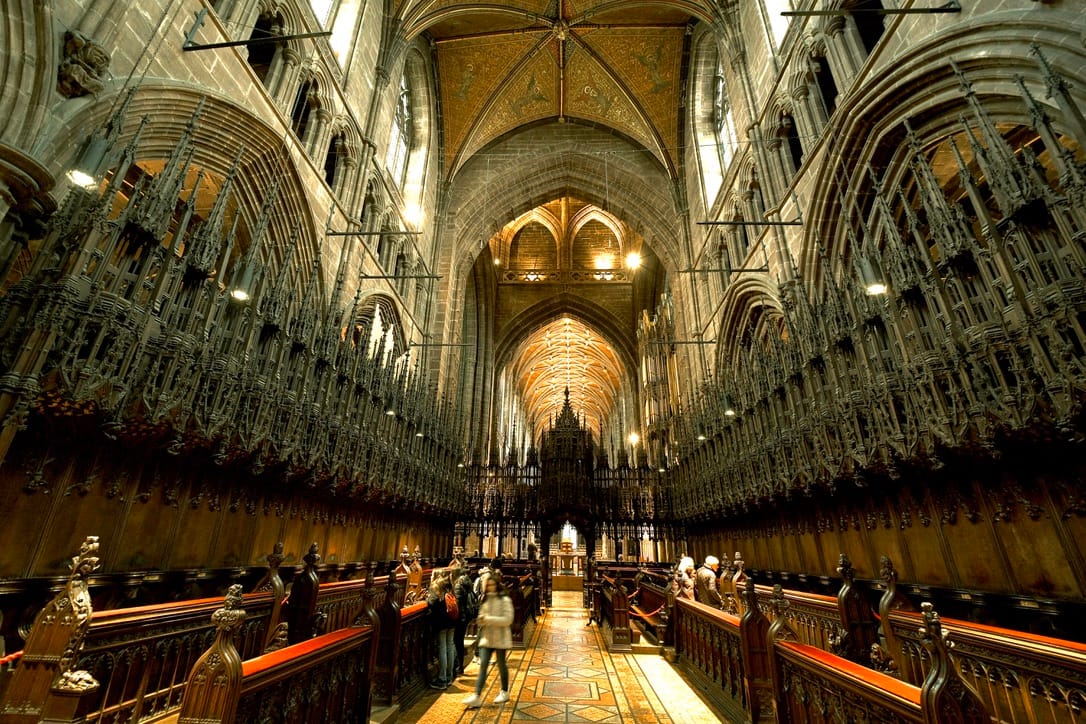
The Rood screen entering the Quire looking east towards the Lady Chapel and west towards the west door.
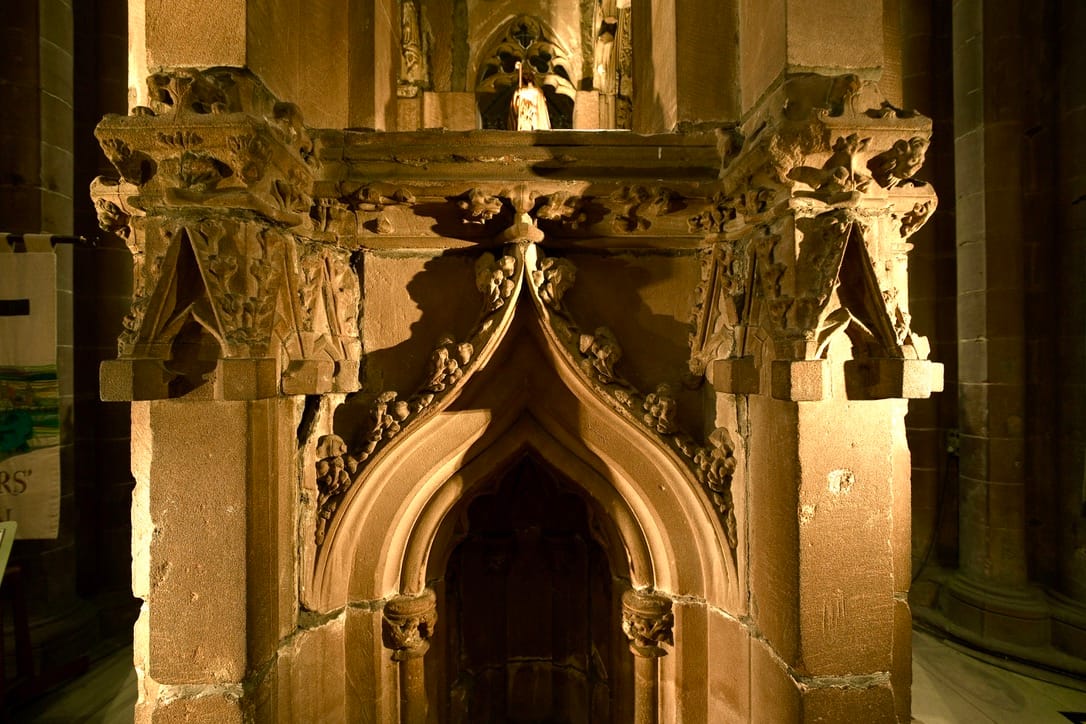
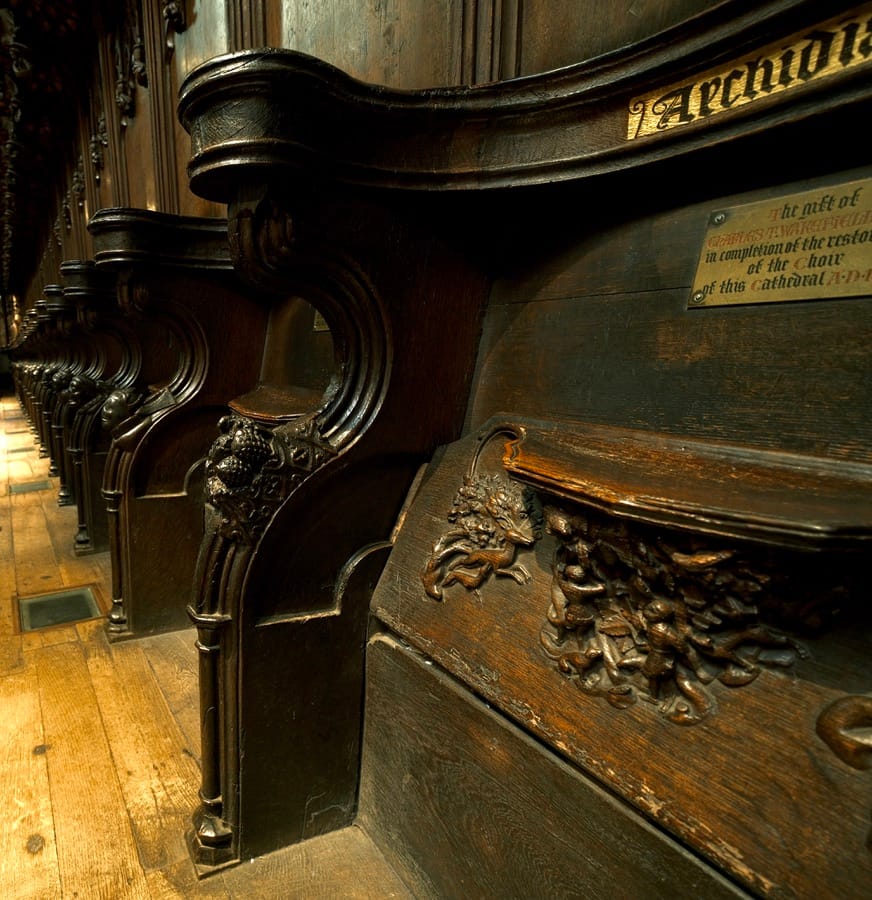
The unusual base of the shrine of St.Werburgh || Misericords in the Quire
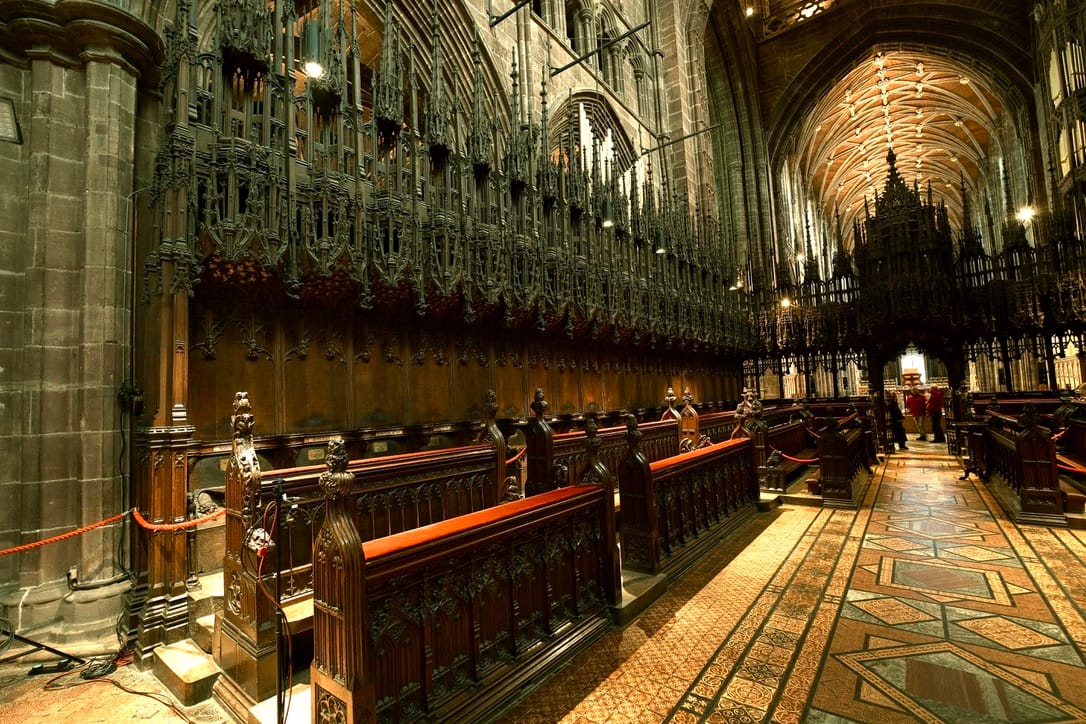
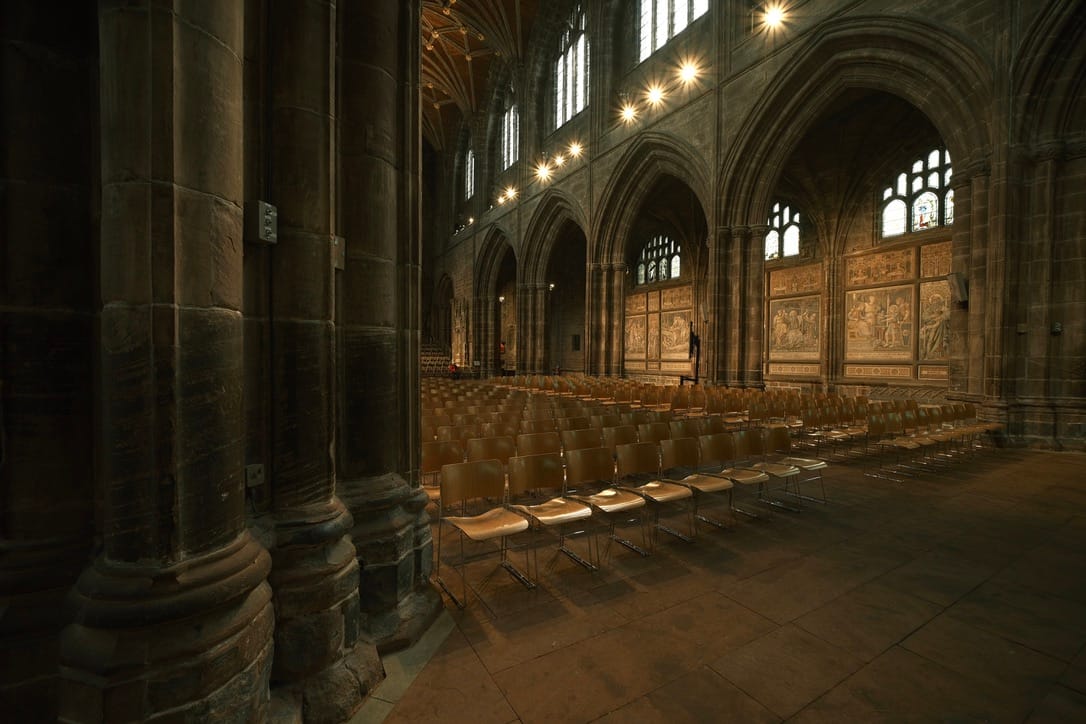
The ornate Stalls and Heads of the Quire with its Mosaic flooring and Rood screen || The Congregational seating in the Nave
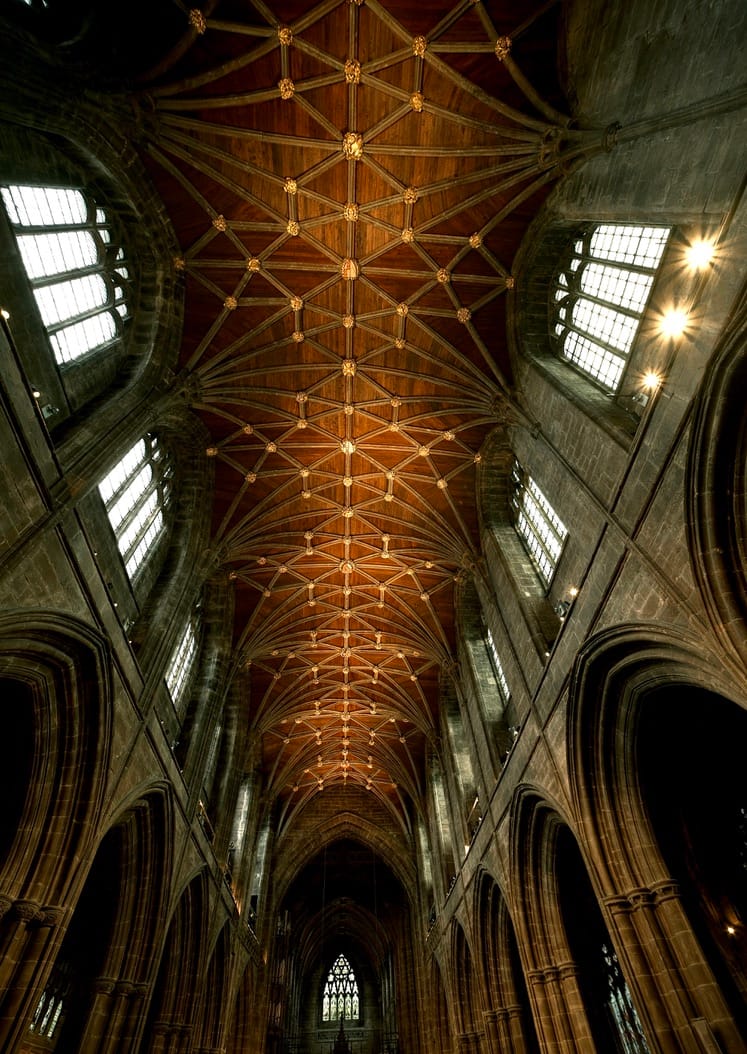
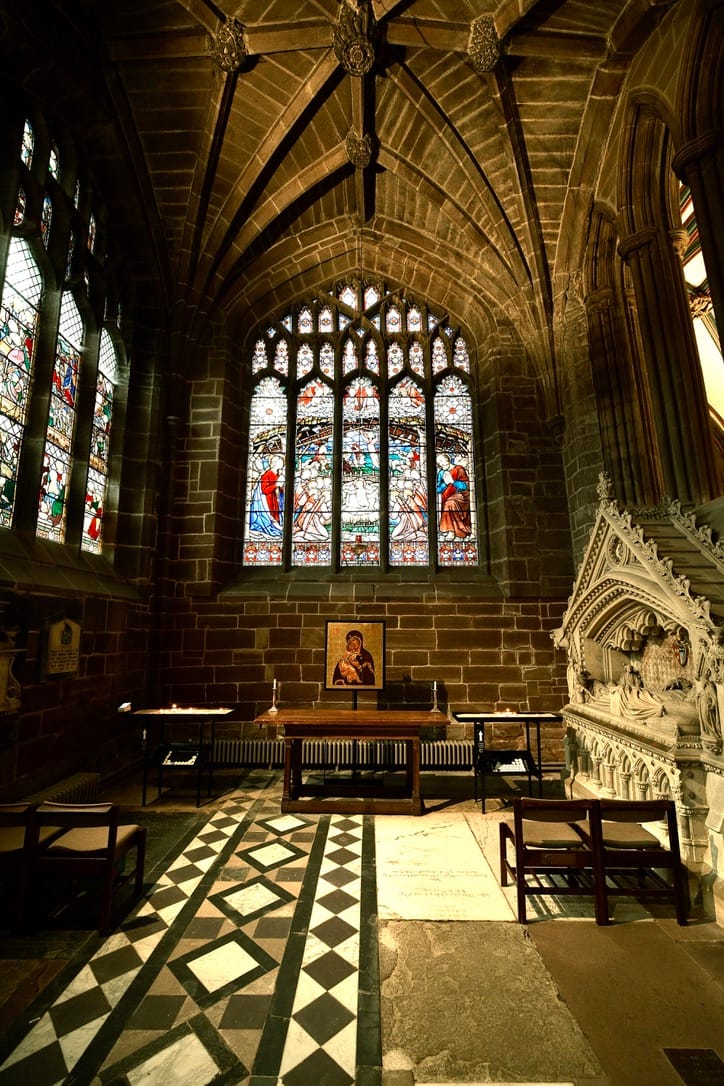
The lattice carved ceiling of the Nave || St. Werburgh's Chapel
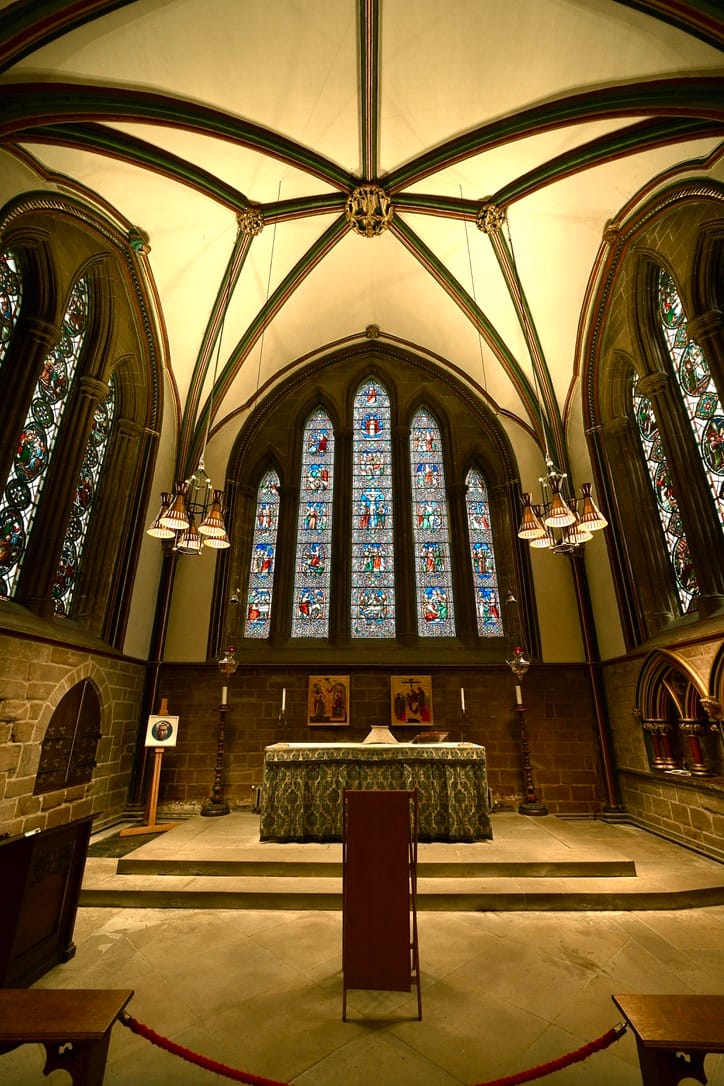
Lady Chapel and its East Window
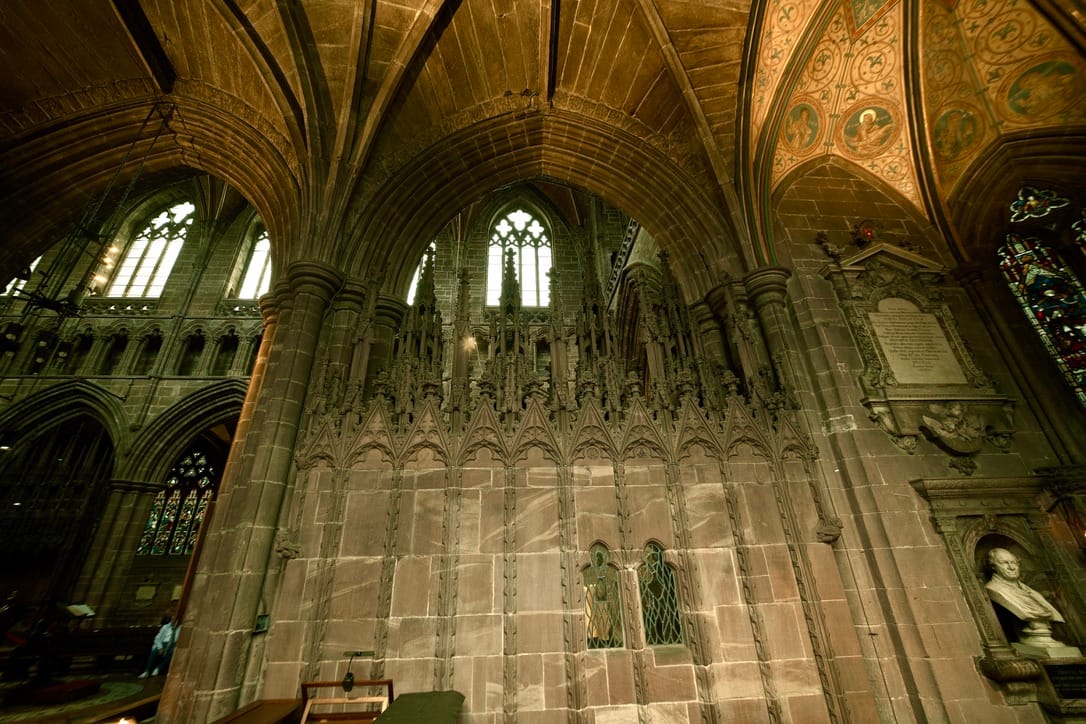
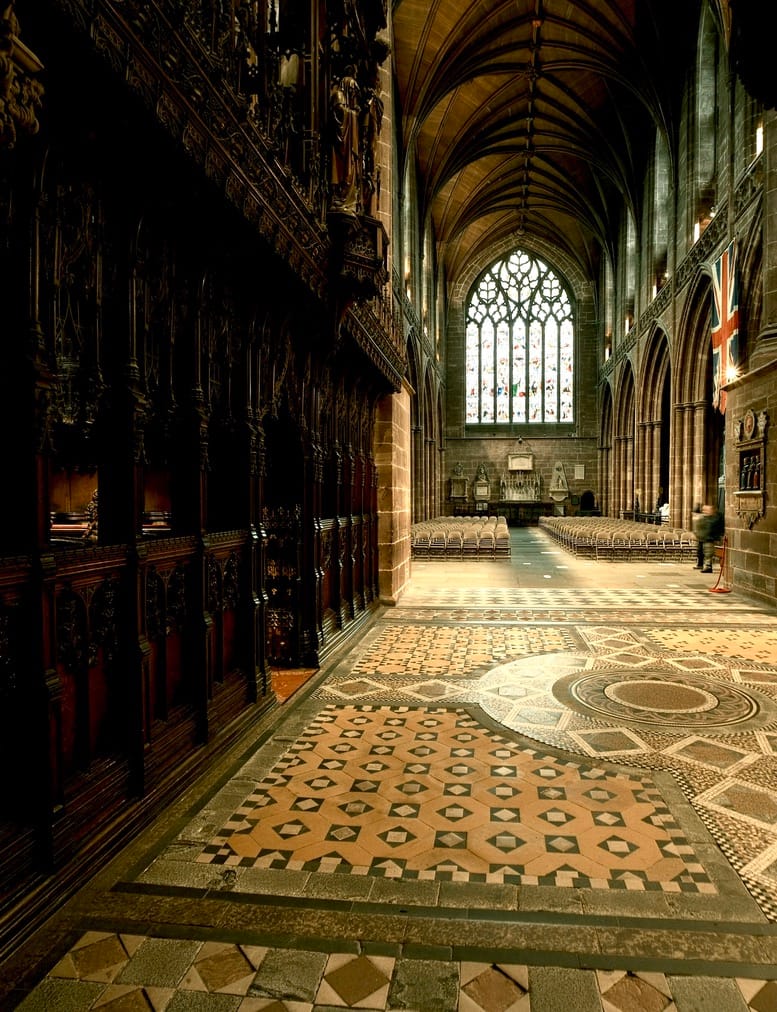
Painted and stone ceiling of the North Isle || South Transept with its ornate flooring
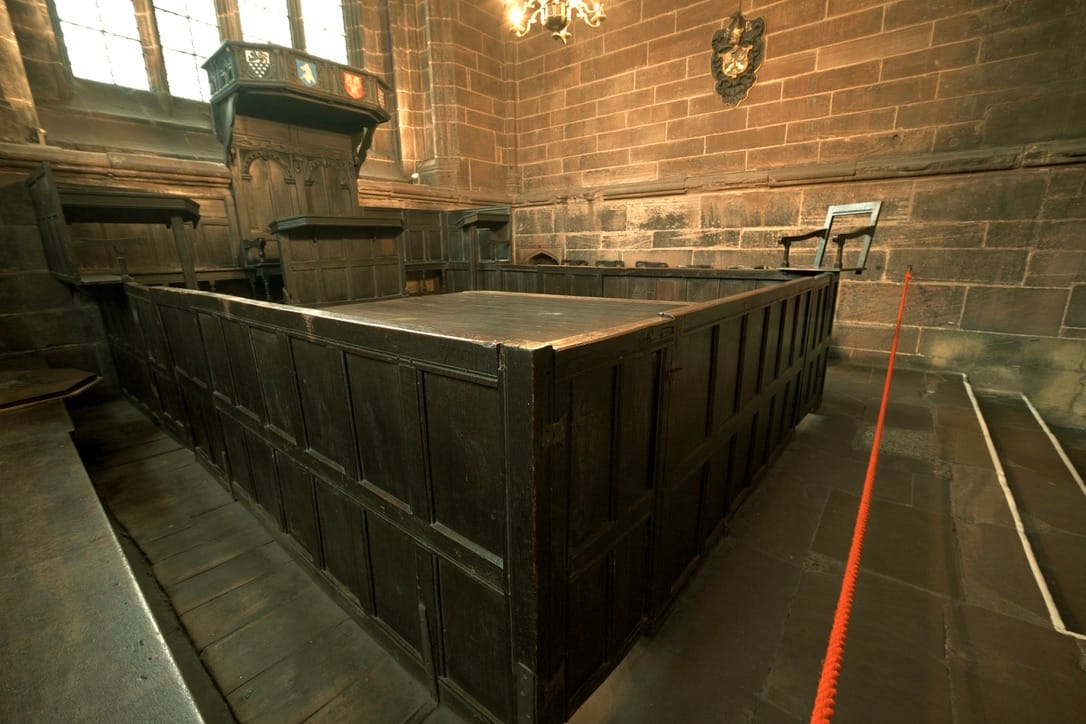
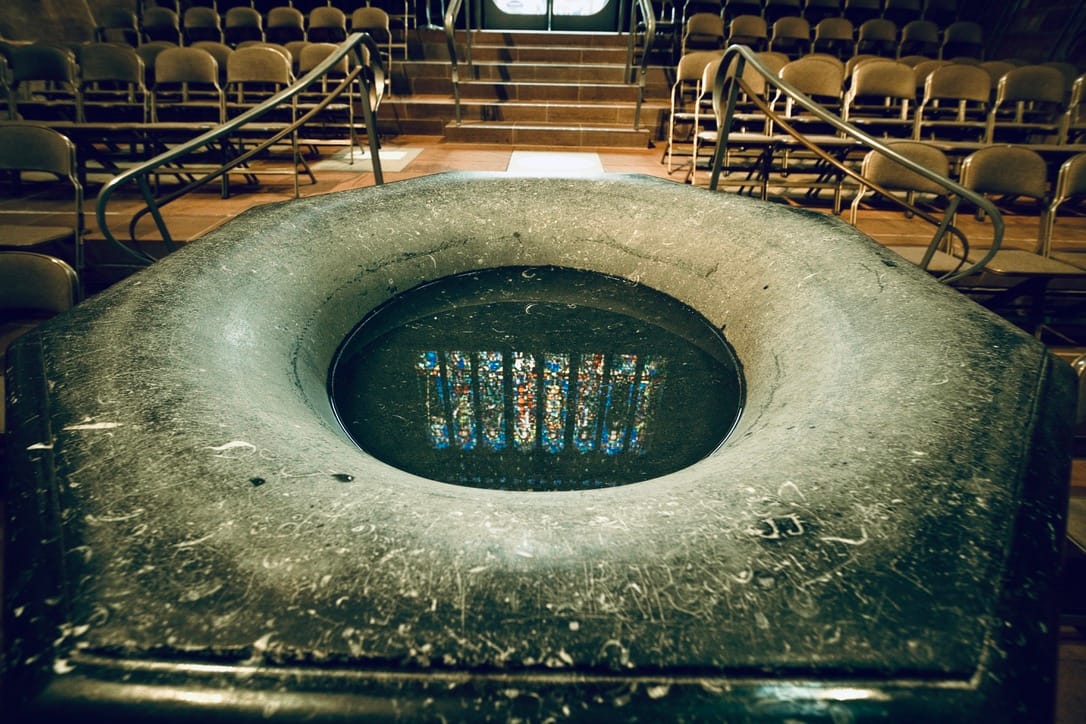
Consistory Court - being the earliest form of the County Court || The Font before the Pilgrim Door and Porch
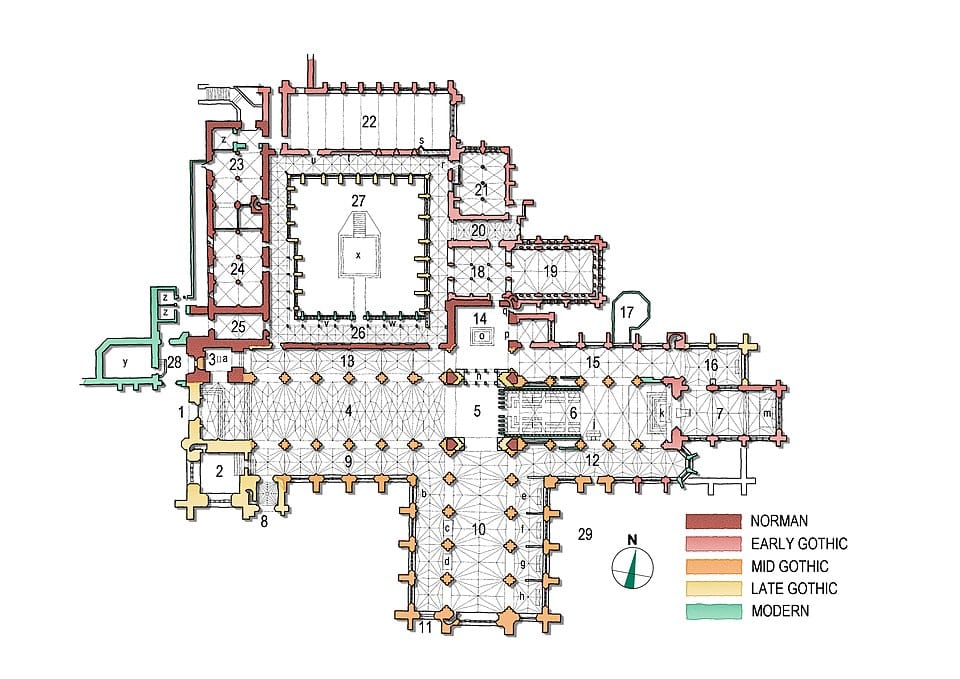
Chester Cathedral plan and key
1. West door |
16. St. Werburgh's Chapel |
a. Font |
n. organ |