Church of St. Mary the Virgin, Shrewsbury
This information and narrative written by Stan Sedman and edited by Roger Reeves - Feb'26
For over a thousand years Christian worship has taken place on this spot. It has been a presence through many periods of Shrewsbury’s growth and history. Below the current floor lie the foundations of two pre-Norman Conquest churches. It has always been recognised that c970 King Edgar founded a church here, but there is belief that an even earlier church existed. Evidence of this came to light in 1864 restoration work, when Archdeacon Lloyd recorded his findings believed there to be an earlier church on the site.
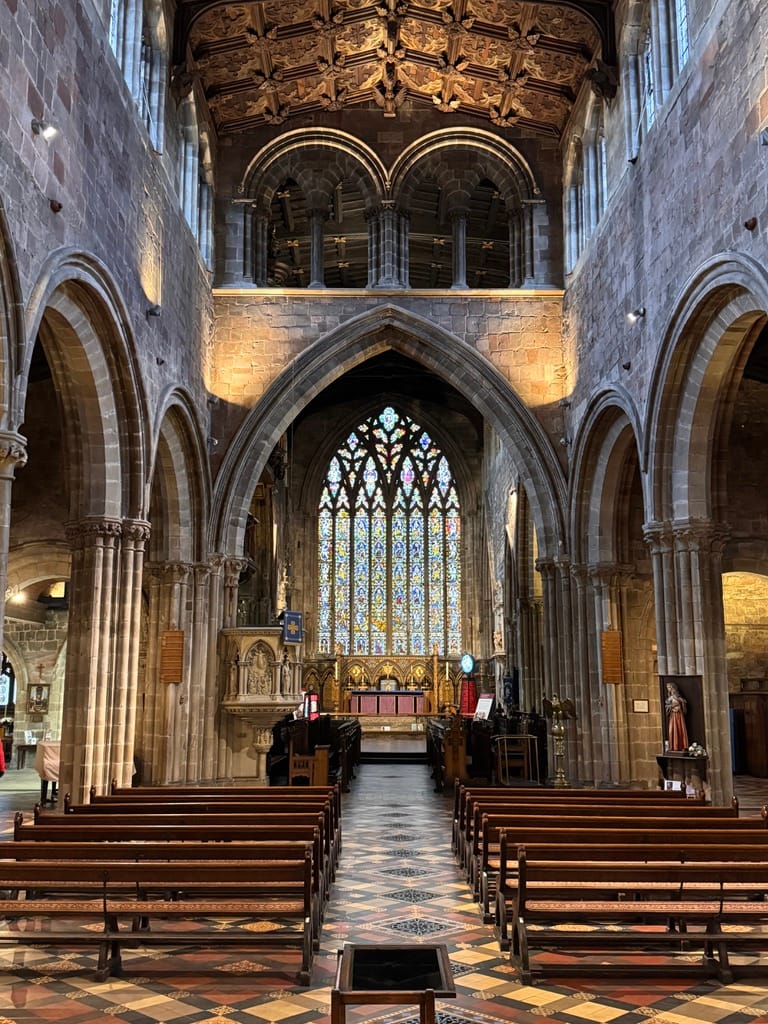
Around 1150, the Saxon church was demolished and a cruciform church built. This had an aisle-less naïve and chancel with transepts and a low central tower. Shallow chapels for St Nicholas and St Anne were positioned in the transepts. 1170-1210 saw improvements with the addition of the red sandstone part of the tower which was followed by the transition from late Norman to Early English styles with aisles being added, the chancel extended, the south porch added and the Leybourne chapel replacing the earlier one on the south side.
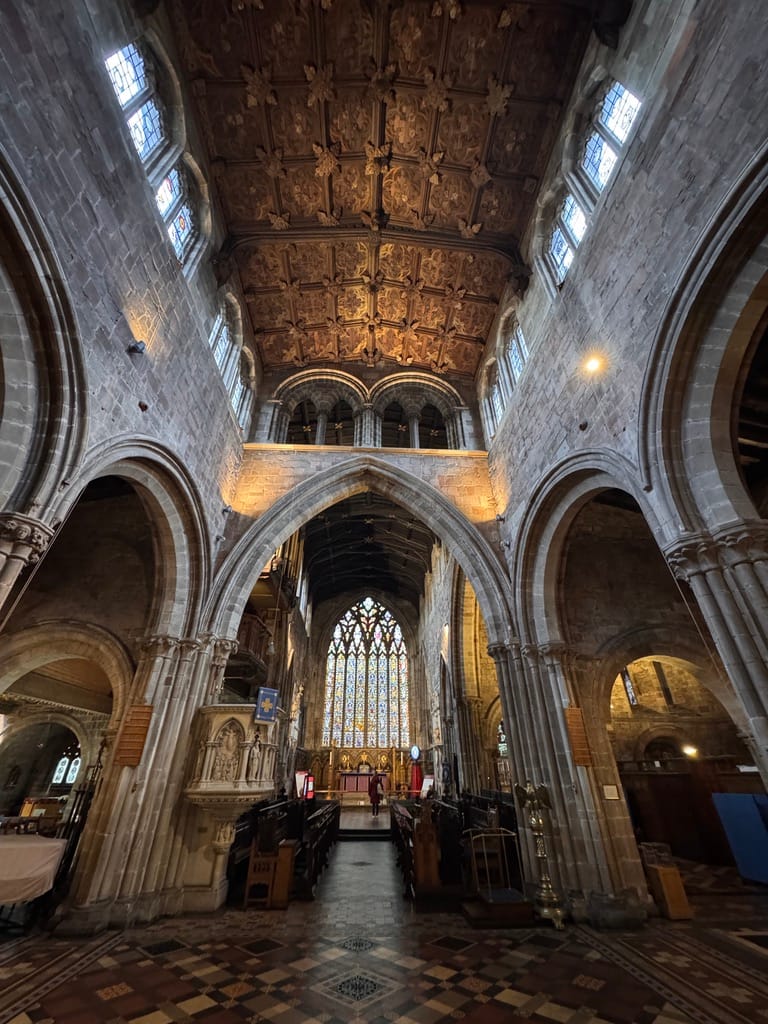
The upper parts of the Norman nave walls were supported, whilst the lower parts were removed and replaced with columns and arches to form arcades. c1360 this chapel was replaced by the larger Trinity Chapel. c1477, the last major alterations took place. The central tower was removed, clerestory windows were added throughout and the nave given its magnificent roof.
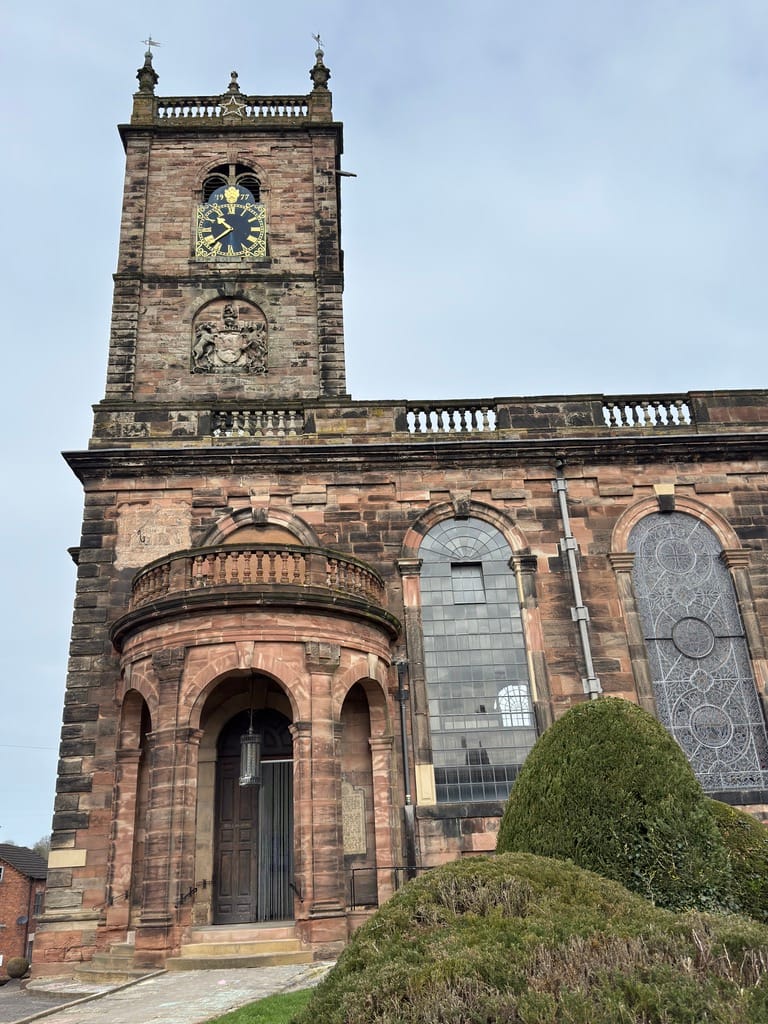
The West tower was raised and the spire added. The North porch was built in 1897 commemorating Archdeacon Lloyd and a larger vestry was created in 1884. Alongside all these major works, minor alterations were ongoing resulting in the beautiful Grade 1 listed building which is loved by so many.
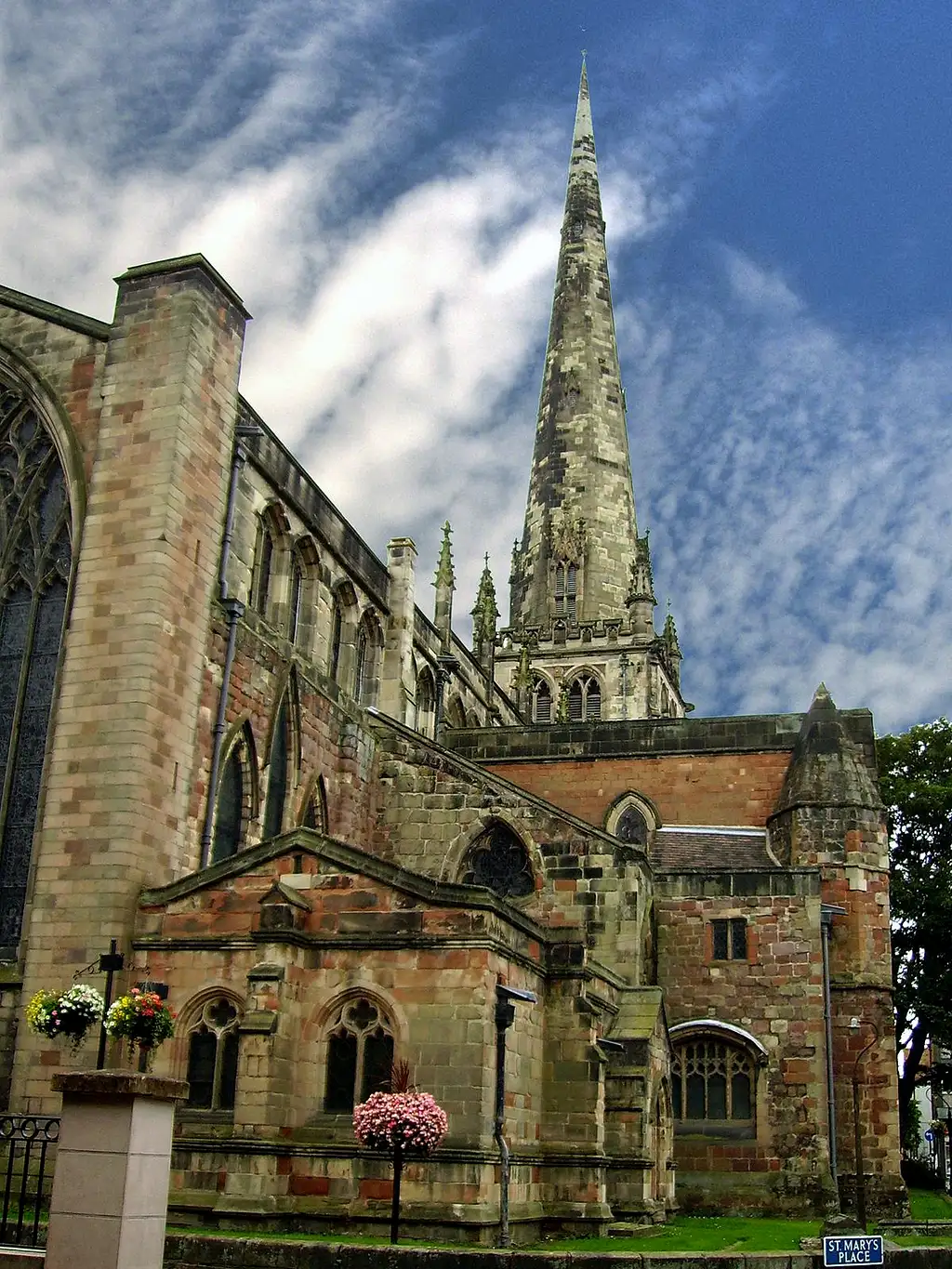
The spire is of particular significance as, at 138ft from its foot, it is reputed to be the third tallest spire in England), the top of which is 222ft from the ground.
Over the years, there was the regular need of repairs and debate about whether it should be rebuilt. In 1894, a storm removed the top 30ft, which came crashing through the roof of the nave.
Enter the church through the west porch and you enter a place of beauty which brings to mind the words of the poet John Keats “A thing of beauty is a joy forever; its loveliness increases”. Look upwards and admire the beautifully restored ceiling where some of the repairs are still visible. As you move further into the church, there is so much to see, but first sit and absorb the atmosphere and reflect on what this beautiful building has meant to so many.
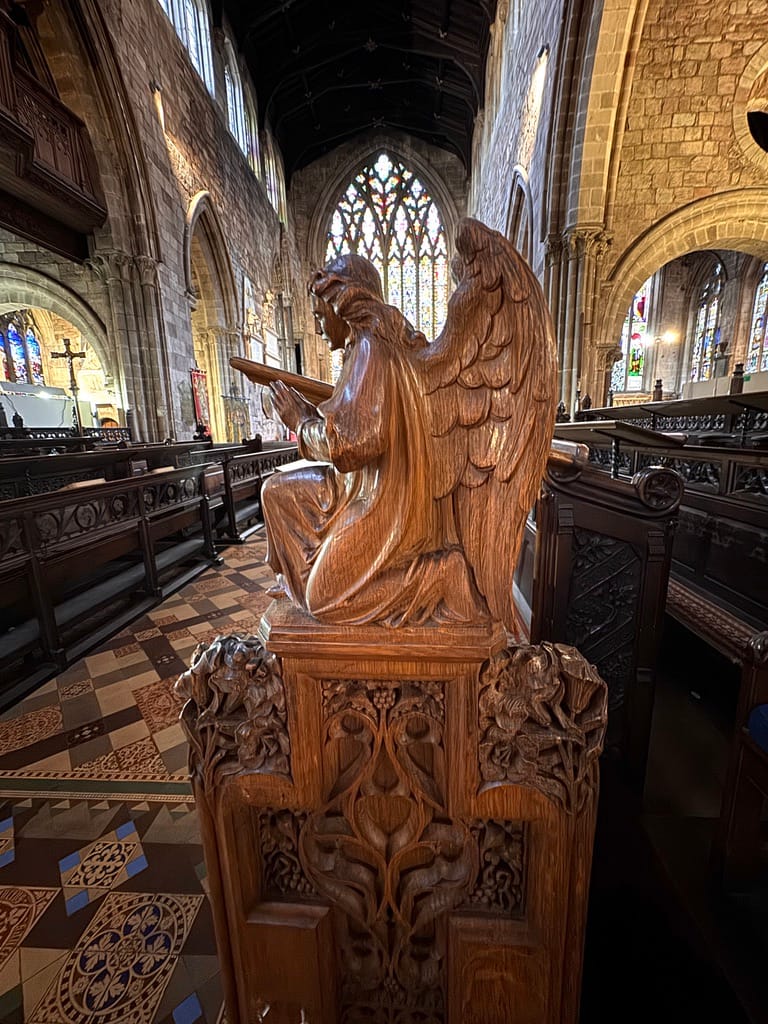
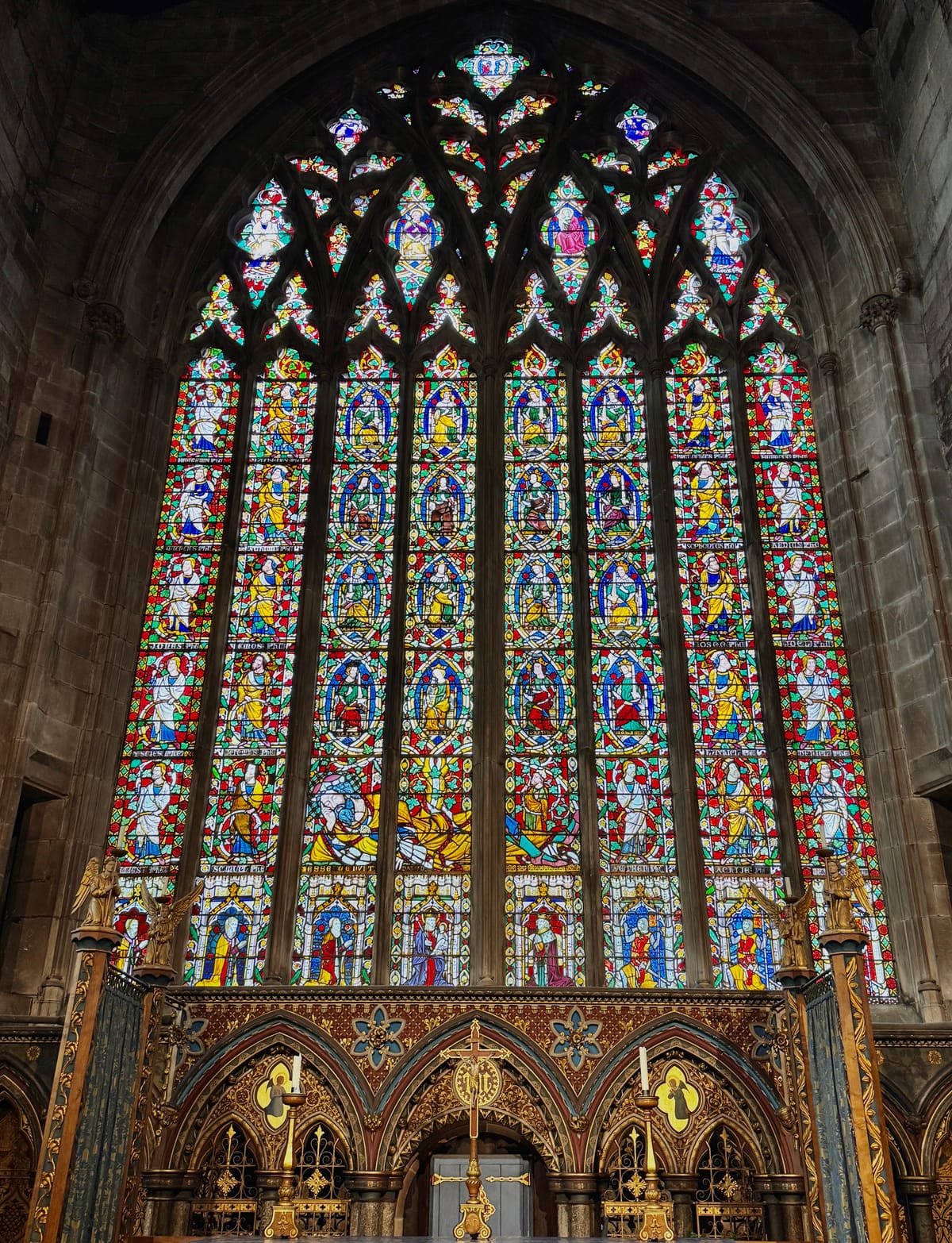
One is naturally drawn down the central aisle towards the chancel with its beautiful Jesse Window dating from c1350. Jesse windows are a representation of the Holy family as predicted in Isaiah 11.1 (see title image). (“There shall come forth a rod out of the stem of Jesse, and a branch shall grow out of its roots, and the spirit of the Lord shall rest upon him”). Jesse, father of David, is lying down with the vine rising from him twining through the kings and prophets before reaching Joseph and Mary. Below Jesse is a row of figures with Virgin Mary and Edward III in the centre with Sir John de Charlton and his sons on the right and his wife Hawis Gardarn with their daughters on the left. Behind the reredos are the words “Pray for Sir John de Charlton, who had the windows made, and his wife Hawis” . This is a superb example of medieval glass, with some restorations and additions. It is understood that the main part of this window originated in the chapel of the Grey Friars then, following the Dissolution, was moved to Old St Chad’s and, when that collapsed, was given to St Mary’s.
This is, however, just part of the wonderful variety of glass which the church contains. A large amount is continental and was brought here in the early part of the 19th century, becoming available as a result of the dissolution of many religious establishments. Of particular note are the 18 panels of St Bernard’s life and work – they are part of a collection of 66 which were in the cloisters of Alternberg Abbey near Cologne in Germany.
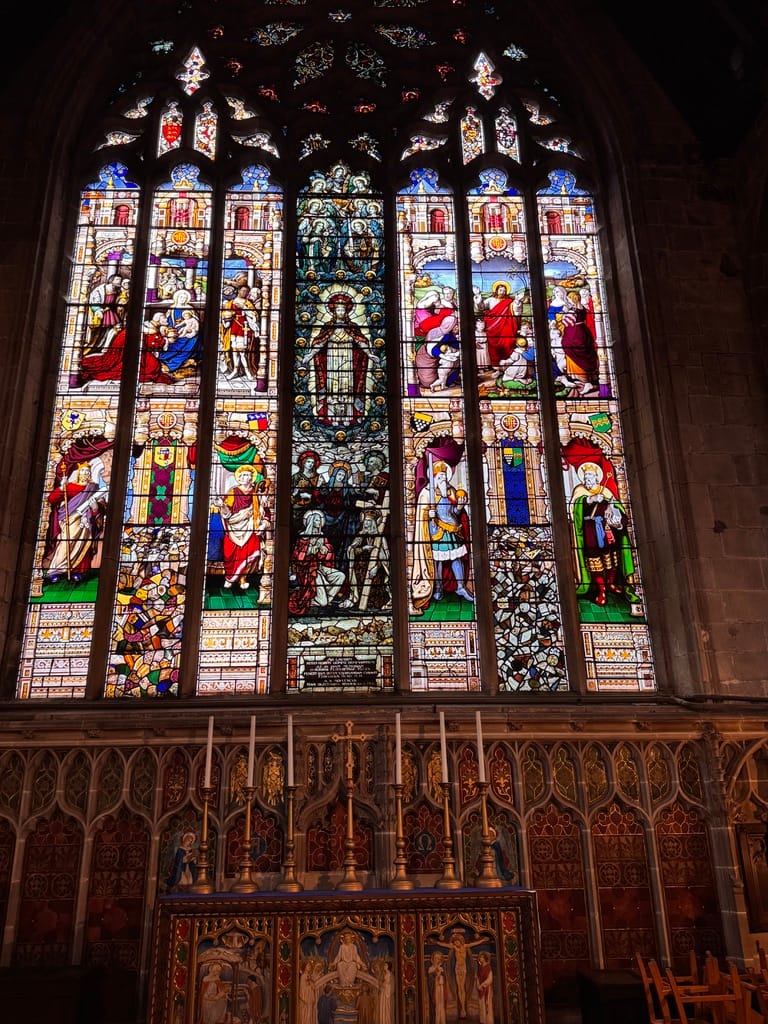
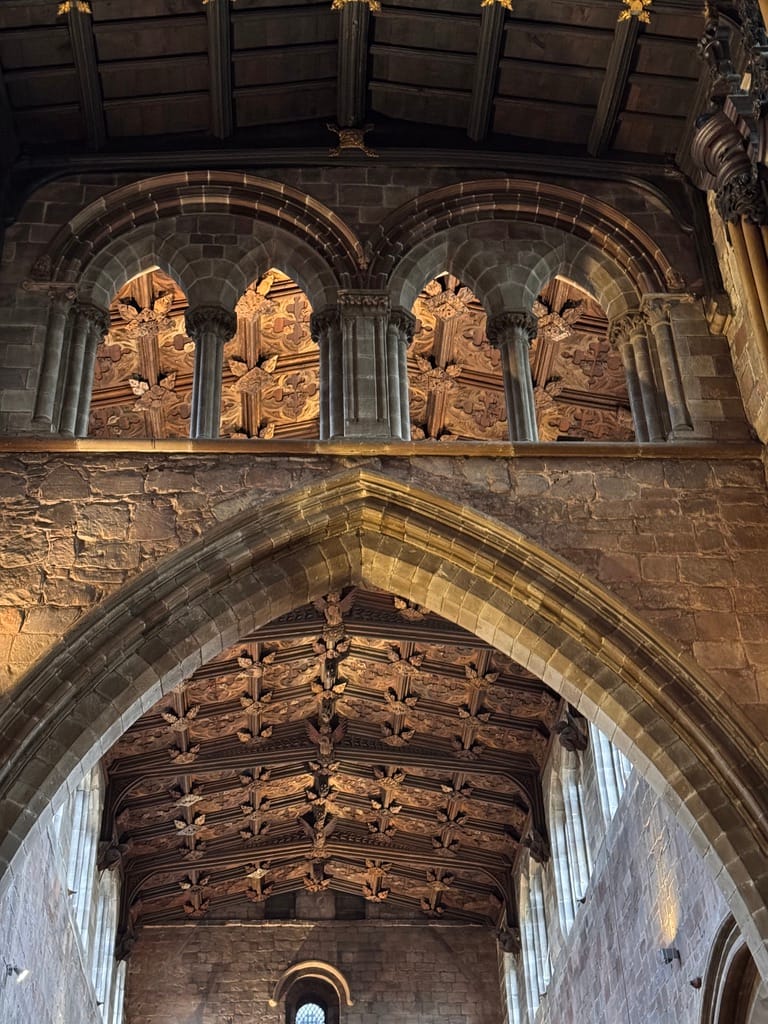
In 1803/4, Revd William Gorsuch Rowlands, a curate at the Abbey Church was involved in arranging the placement of some into Lichfield Cathedral. Later, in 1828, he became vicar of St Mary’s and most of the windows then were of plain glass, so he began to obtain and install much of the glass we see today. Much of the work was undertaken by Betton & Evans, a Shrewsbury firm. Information panels explaining the history of the glass are in position around the Church.
The main floor of the church is covered with Minton tiles dating from 1864/5. The ones in St Catherine’s chapel date from the 1840s and show a variety of designs. In the chancel and sanctuary are tiles by Godwins of Herefordshire dating from 1868 whilst the Trinity chapel tiles are by Maws & Co, dating from 1888.
As you proceed around the church, you will see many monuments and items of interest. Of particular note is the font dating c1400 at the west entrance. The pulpit dating from 1853 was by Landucci, an Italian stonemason who settled in Shrewsbury 1850. The organ from 1911 was made by JJ Binns of Leeds.
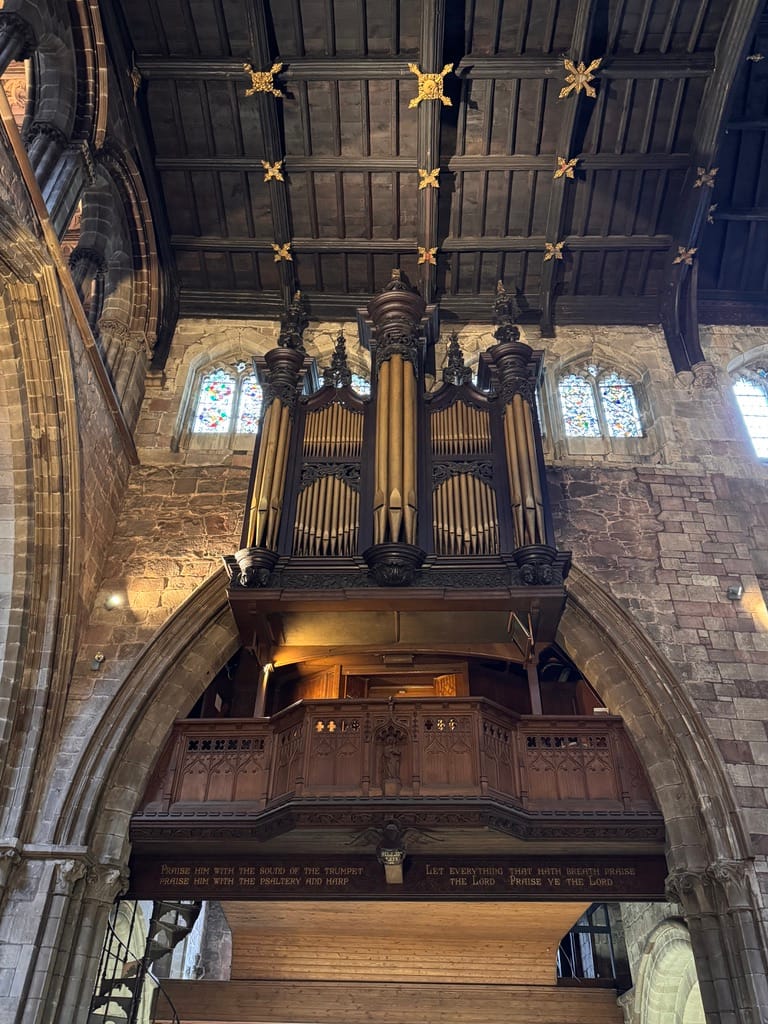
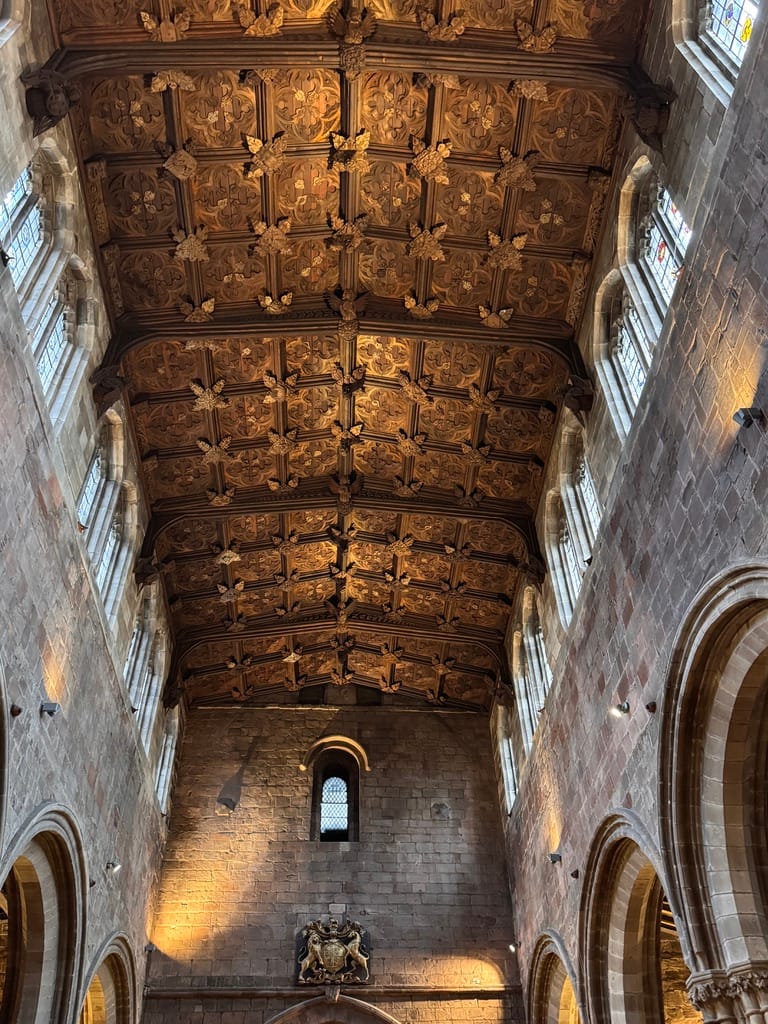
The church, a Grade I listed Building, was declared redundant in 1987 and is in the care of The Churches Conservation Trust who have carried out extensive repairs and programme of conservation, cleaning and releading of much of the window glass. The church is used for exhibitions, talks, craft fairs, formal events, real ale festivals and of course the annual Charity Christmas Card Shop.
In 2002, Antony Gormley’s Field for the British Isles featuring 40,000 terracotta figures was installed in the Trinity Chapel, which was breathtaking to view. In recent times, the light artist Andy McKeown has transformed the church into a giant kaleidoscope with his ‘Splinters of Heaven’ show, casting refracted images supported by music – both beautiful and magical to experience. The church remains a much treasured part of Shrewsbury and is visited by many thousands of visitors each year.
As you are leaving, spot the Cadman plaque outside, which records the event when he fell to his death on 2nd February 1739. He was a steeplejack who supplemented his income by performing tricks on ropes suspended from high steeples and towers. He secured a rope to the tower and then through louvers high up in the steeple, then stretched the rope across the river to the Gay Meadow. He then proceeded to walk up the rope, performing tricks. At the top, he fastened a wooden breastplate with a central groove which fitted over the groove and then began to fly down the rope back to earth. Unfortunately the rope broke and he fell to his death near St Mary’s Water Gate.
Feb'26